

Food
Maximize sustainable food potential and minimize waste
The Librixer technology solution enables concentrating protein from legumes and makes the whole food production process more sustainable and efficient.
A detailed look at Whole Grain Flour processing
The Librixer technology introduces a novel approach to milling that enhances the nutritional, functional, and sustainability aspects of whole grain flour.
In a newly finalised project "GrainiXer", we have demonstrated with winter wheat, rye and oats that the Librixer produces ultrafine whole grain flours with excellent baking performance. And it does it in one single step! Whereas the coarser reference flours were milled multiple times, up to six times!
Whole grain flours produced with Librixer were compared to whole grain flours milled with traditional methods
Looking at the particle size distribution (PSD), it was shown that the proportion of particles below 50 microns were increased by 100% for wheat, 78% for rye and 60% for oats.
This has impact on the baking performance, bioavailability of nutrients, processability and yield (to produce oat drinks for example), among other benefits.
Flour milling today
Roller mills dominate large-scale flour production (white flour).
Stone mills are valued for whole grain quality but can’t scale.
Growing demand for whole grain nutrition challenges the dominance of white flour.
The Librixer advantage
Direct milling process preserves natural nutrition (like stone mills).
Scalable system fits industrial production needs (like roller mills).
Enables millers to produce nutrient-rich whole wheat flour efficiently and at scale.
Librixer’s unique positioning in the flour milling landscape
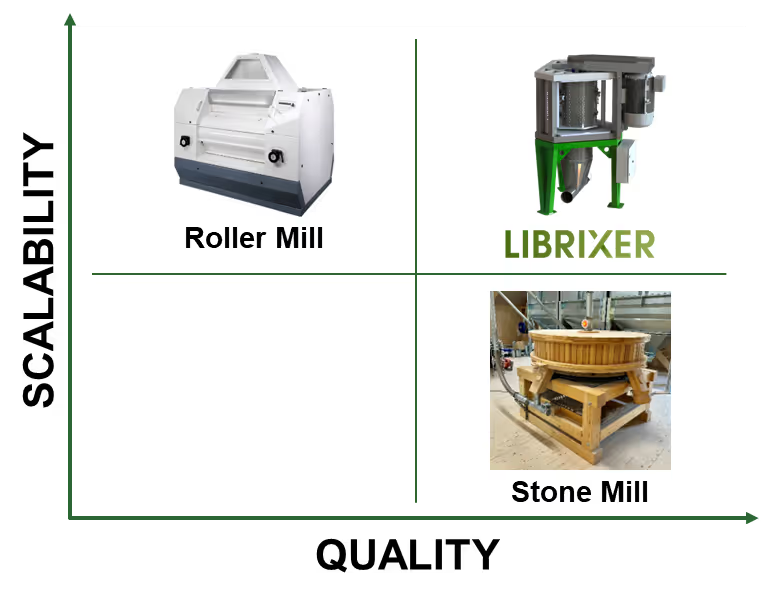
Librixer combines the scalability of industrial roller mills with the quality and simplicity of traditional stone milling.
Examples of processable materials

Peas

Rapeseed

Oak

Millet
Examples of end products by/after our technology
Peas

Pea source

Pea kernel

Pea hull

Pea starch

Pea protein
Rapeseed

Rapeseed source

Rapeseed hull

Rapeseed kernel

Rapeseed germ

Rapeseed oil
Oak

Oak source

Oak "smoke" flavor

Oak "vanilla" flavor
Millet

Millet source

Millet hull

Millet kernel
Peas
Pea source
Pea kernel
Pea hull
Pea starch
Pea protein
Rapeseed
Rapeseed source
Rapeseed hull
Rapeseed kernel
Rapeseed germ
Rapeseed oil
Oak
Oak source
Oak "smoke" flavor
Oak "vanilla" flavor
Millet
Millet source
Millet hull
Millet kernel
Datasheets for food
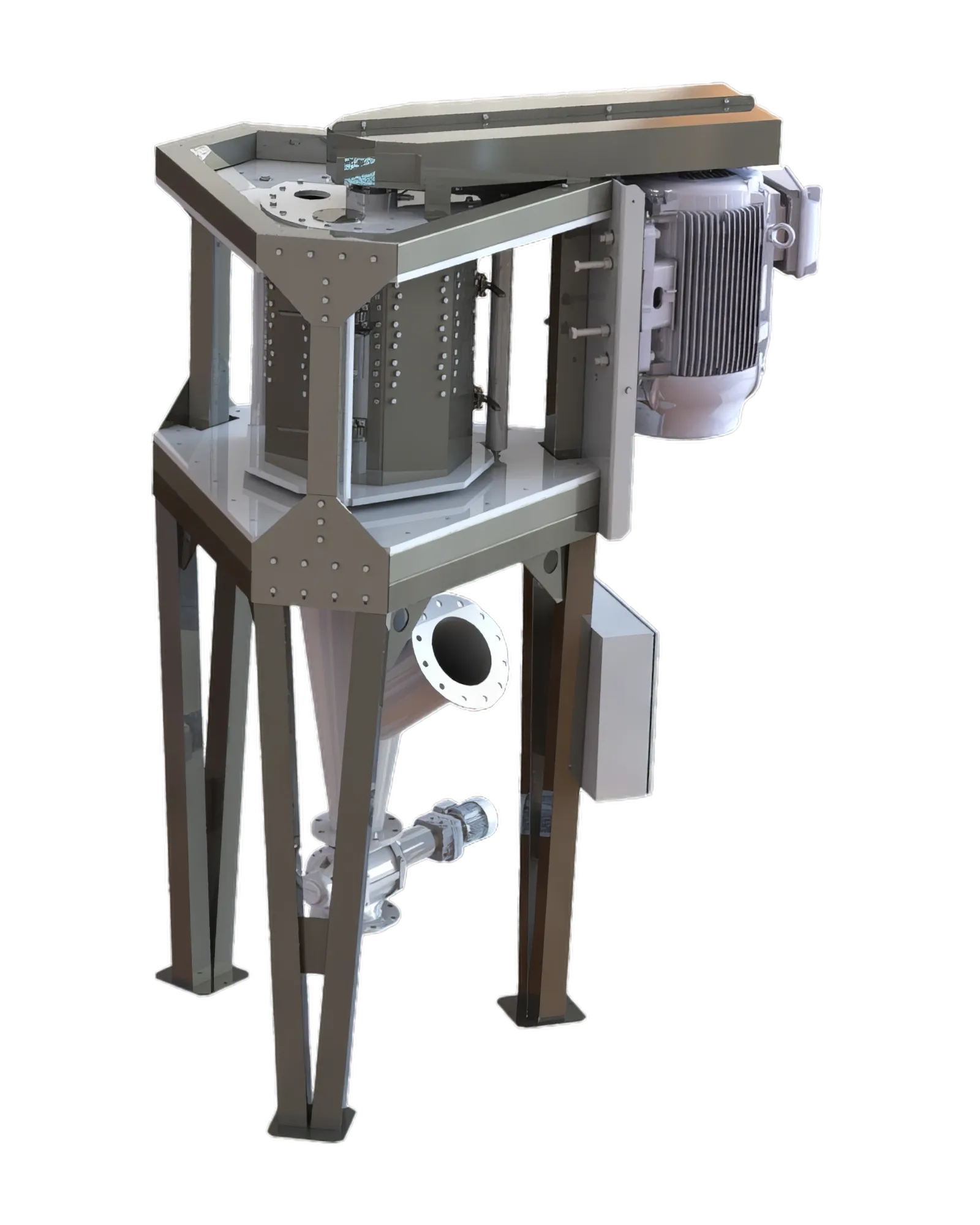
Click the buttons below to alternate between our two machines
Librixer Micronizer
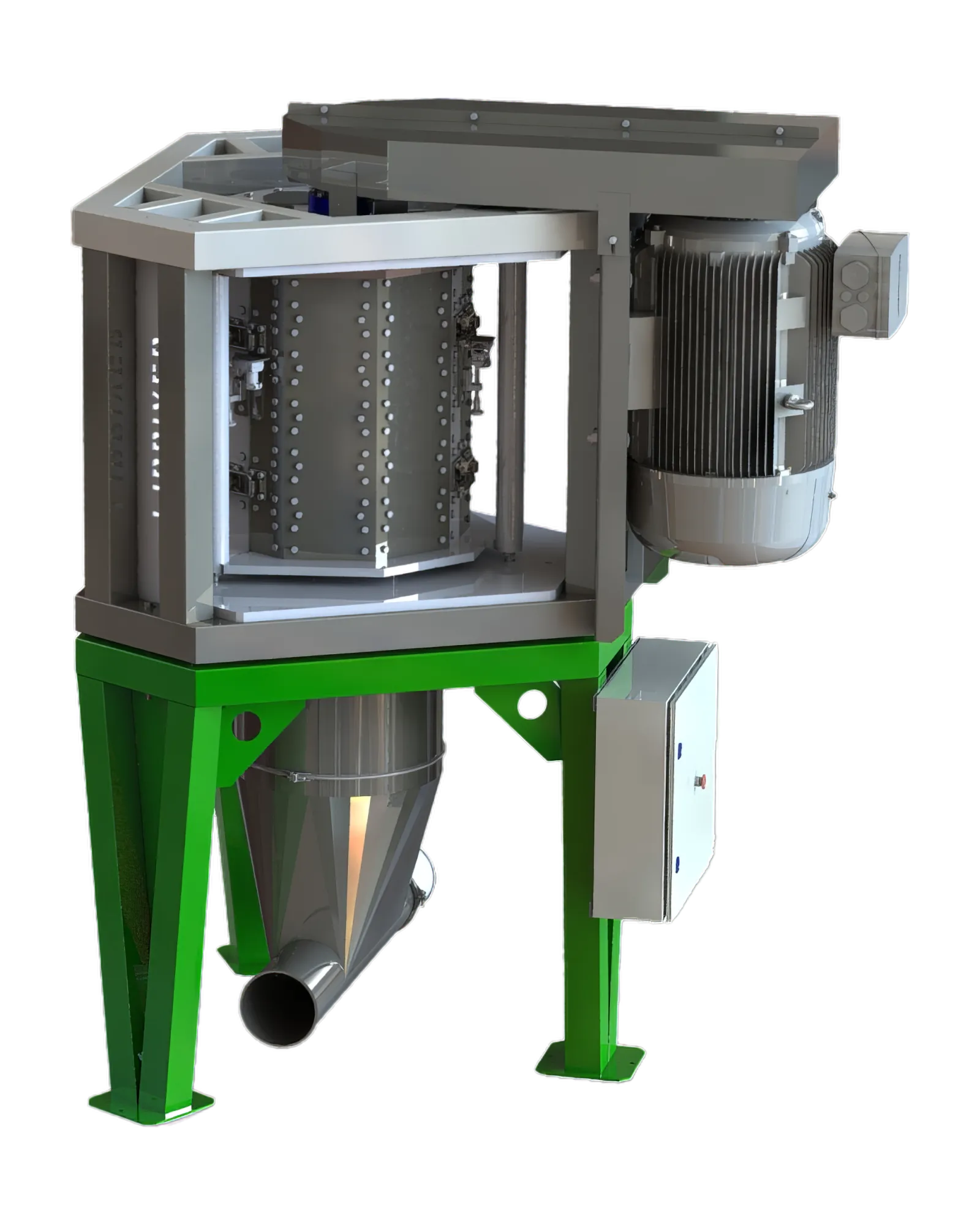
Librixer Fractionator
Unique liberation along natural boundaries
In the microscope image you'll see a single oak fiber, liberated by the Librixer. An example of the uniqueness that can be created through the process of micronization.
The intact fiber has an unmatched aspect ratio while still being intact. Source material; recycled French oak from a whiskey barrel; dry-aged and liberated.


A closer look at liberation using yellow peas.


Drag the slider left or right to compare material structures
Above is a cross-section SEM image of yellow peas.
Drag the slider to compare protein and starch before and after liberation – with the end result being protein powder and intact starch ready for sorting.

Bi-modal PSD diagram
Traditional grinding techniques tend to normally result in a bell-shaped distribution curve. Our technology can, through release along natural boundaries, produce humped curves – which in turn facilitate mechanical sorting of composites where the different parts have different mechanical characteristics.
The diagram shows liberated, micronized and de-hulled kernels, where the pericarp's more flexible fiber structure commonly results in larger particles compared to the rest of the seed.
Example of general protein shifting process with the Librixer technology

Learn more about the Liberator in the context of food processing


